
Volvo EX60 Vs. Volvo XC60 Mild Hybrid And Plug-In Hybrid Compared

Volvo EX60 vs. Volvo XC60 vs. Volvo XC60 PHEV: At a Glance
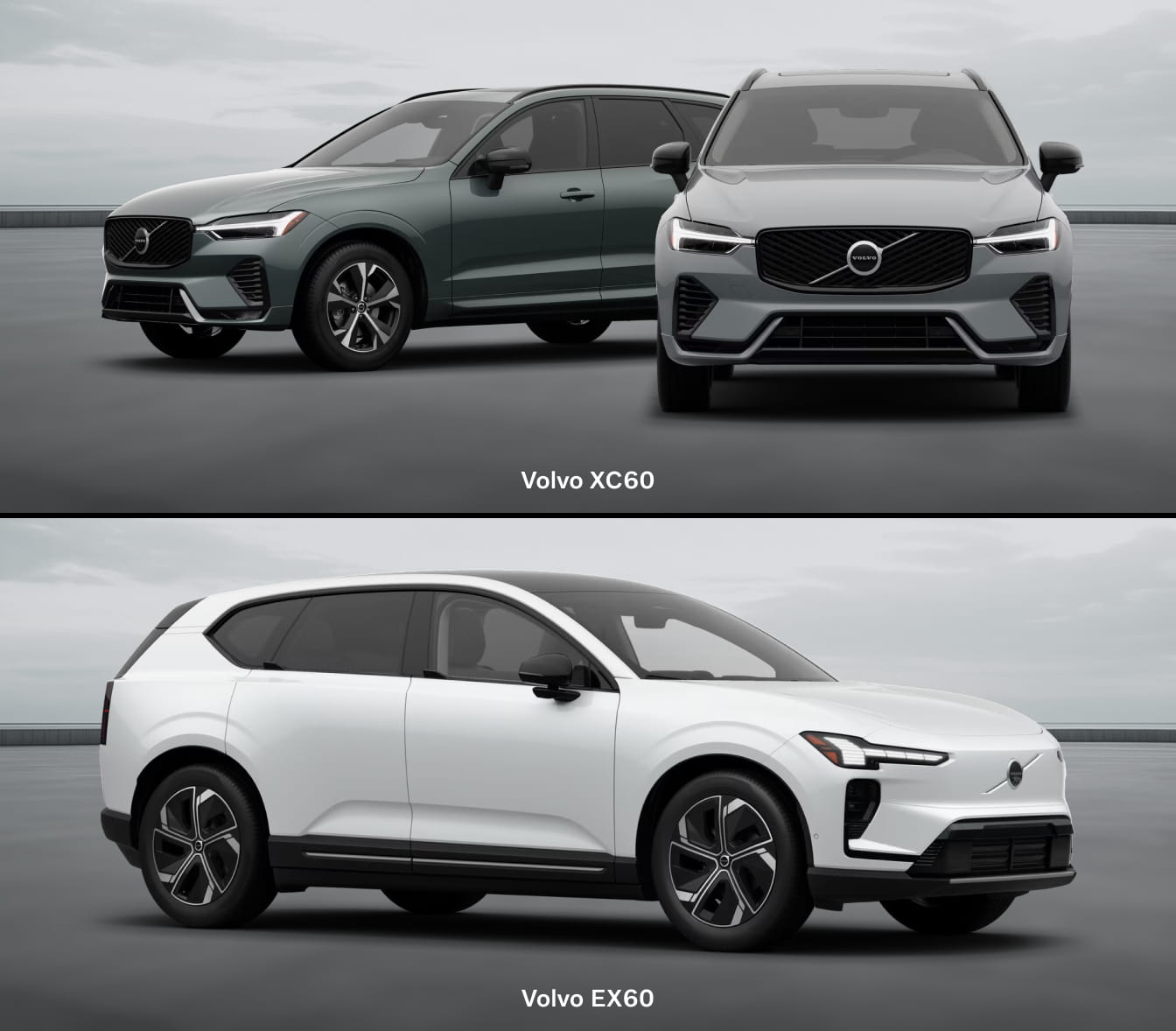
- The Volvo XC60 is offered as a mild hybrid and plug-in hybrid, while the Volvo EX60 is an all-electric vehicle.
- Each configuration is powerful, though the Volvo EX60 delivers the highest available output, at 670 horsepower.
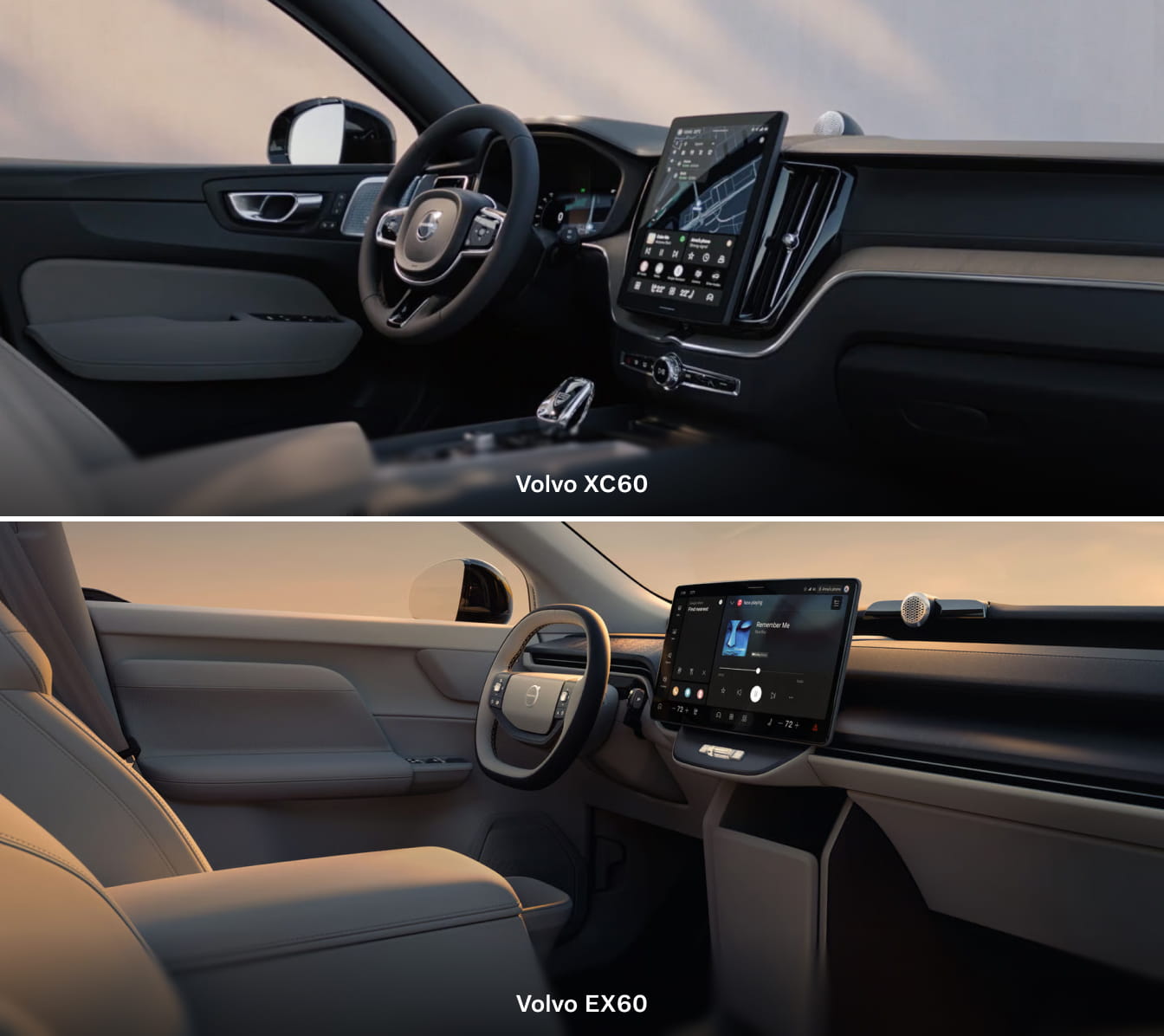
- The Volvo EX60 contains a larger touchscreen, whereas the Volvo XC60 and Volvo XC60 PHEV have a standard crystal gear selector.
- Currently, the Volvo EX60 should arrive at dealerships later this year, but you can compare the other models in person at Willis Volvo Cars.
Which Midsize SUV Feels Like Your Perfect Fit?
Our Volvo EX60 vs. Volvo XC60 vs. Volvo XC60 plug-in hybrid comparison has all the details you need to make an informed choice about your next vehicle selection. Do you want to go fully electric with zero tailpipe emissions, stick to a more traditional mild-hybrid setup, or have the best of both worlds with a plug-in hybrid? No matter what you're looking for, one of these three models is likely a great companion for your commutes and adventures. Learn more at Willis Volvo Cars.
Electric or Gas?
The above is the biggest question when it comes to a Volvo EX60 vs. Volvo XC60 vs. Volvo XC60 PHEV matchup.
To be clear, all three cars are electrified in some way. Here's how they vary:
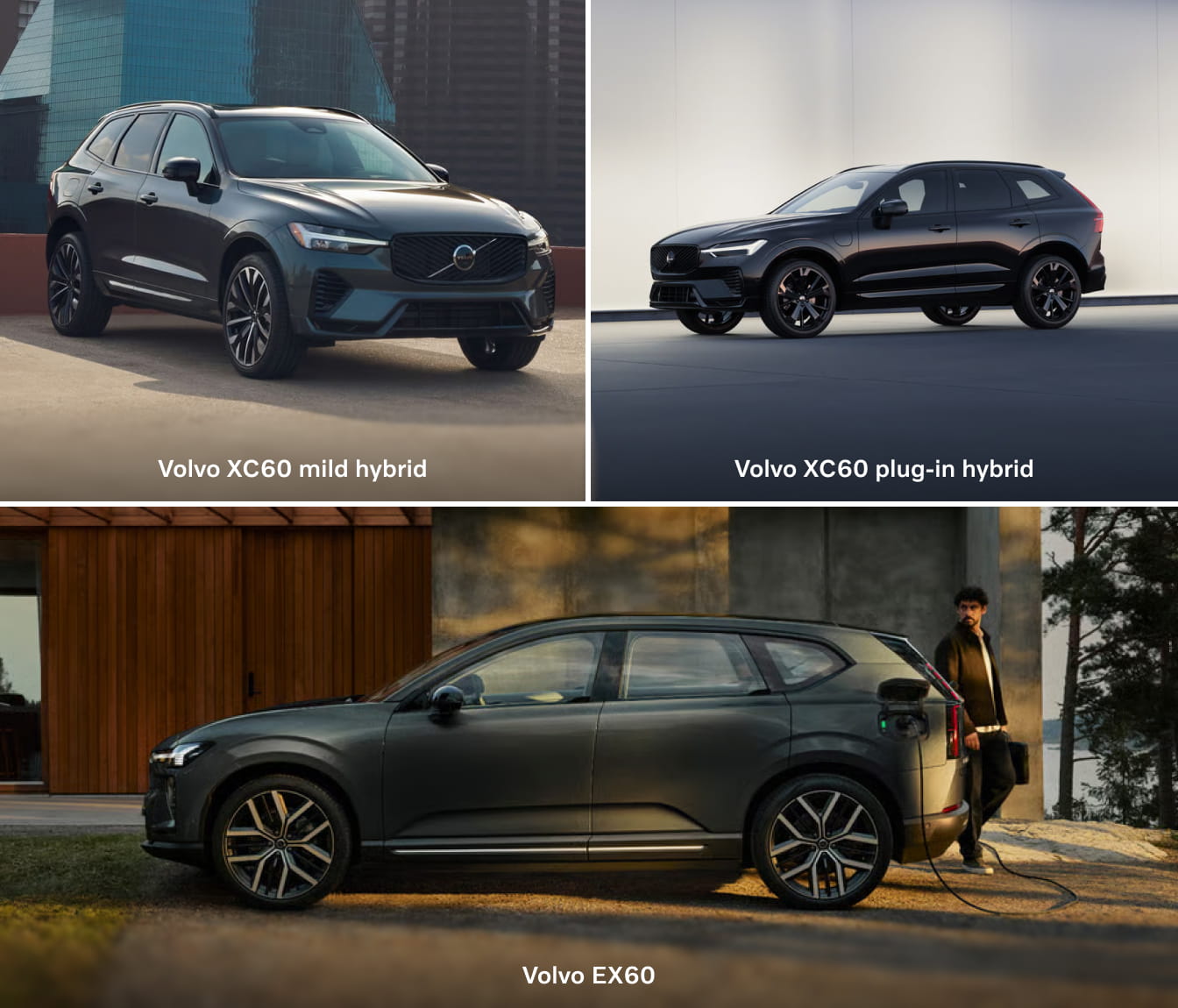
- Volvo XC60: The Volvo XC60 mild-hybrid vehicle uses a gas combustion engine, a lithium-ion battery, and regenerative braking technologies to maximize fuel usage.
- Volvo XC60 PHEV: This configuration is nearly identical to the Volvo XC60 but uses plug-in hybrid power that allows you to travel a short distance on electricity.
- Volvo EX60: This model is a new member of our all-electric Volvo vehicles – it solely runs on electricity without any gas.
| Volvo EX60 | Volvo XC60 | Volvo XC60 PHEV | |
|---|---|---|---|
| Powertrain |
| B5 2.0L 4-Cyl | T8 2.0L 4-Cyl |
| Charging or Fueling | Charge w/ electricity | Fuel w/ gasoline | Fuel w/ gasoline and charge w/ electricity |
| Max Electric or Gas Range | 400 mi1 | 489 mi2 | 35 mi1 |
| Fastest Charging Time | 16 min3 | N / A | 5 h3 |
| MPG or MPGe | N / A | 23 / 30 (Cty / Hwy)4 | 63 (Combined)1 |
| Horsepower |
| 247 | 455 |
| Seating Capacity | 5 | 5 | 5 |
| Cargo Volume (Standard / Max) |
| 21.6 / 63.3 cu ft | 21.1 / 63.3 cu ft |
Volvo XC60 PHEV vs. Volvo EX60 vs. Volvo XC60 Range, Charging & Fuel
The new Volvo XC60 for sale reaches nearly 500 miles of total gas range,2 thanks to its 18.8-gallon tank and efficient MPG. Because this model is a mild hybrid, it doesn't rely on any form of charging.
Fully electric range and charging do apply to the Volvo XC60 plug-in hybrid and the Volvo EX60. Here are the highlights:
- The Volvo XC60 PHEV can travel up to 35 miles1 and charges from 0% to 100% in five hours.3
- Depending on the configuration, the Volvo EX60 range can reach between 307 and 400 miles,1 and this EV can charge from 10% to 80% in 16 to 19 minutes.3
Performance & Driving Experience
Each iteration in our Volvo EX60 vs. Volvo XC60 vs. Volvo XC60 PHEV comparison provides different specs. See more details below:
- The Volvo XC60 is equipped with a B5 AWD powertrain that produces 247 horsepower and a 6.5-second 0-60 mph time, which is great for those who prefer composed, leisure-like handling for daily commutes and road trips.
- Consider the Volvo XC60 plug-in hybrid for more power and speed; its powertrain delivers a thrilling 455 horsepower and motivates this PHEV to go from zero to 60 in just 4.5 seconds.
- The Volvo EX60 is the most responsive and powerful, with three powertrains that provide heart-racing horsepower and acceleration. Enjoy anywhere from 369 to 670 horsepower and 0-60 mph times as low as 3.8 seconds.
Interior, Space, and Tech
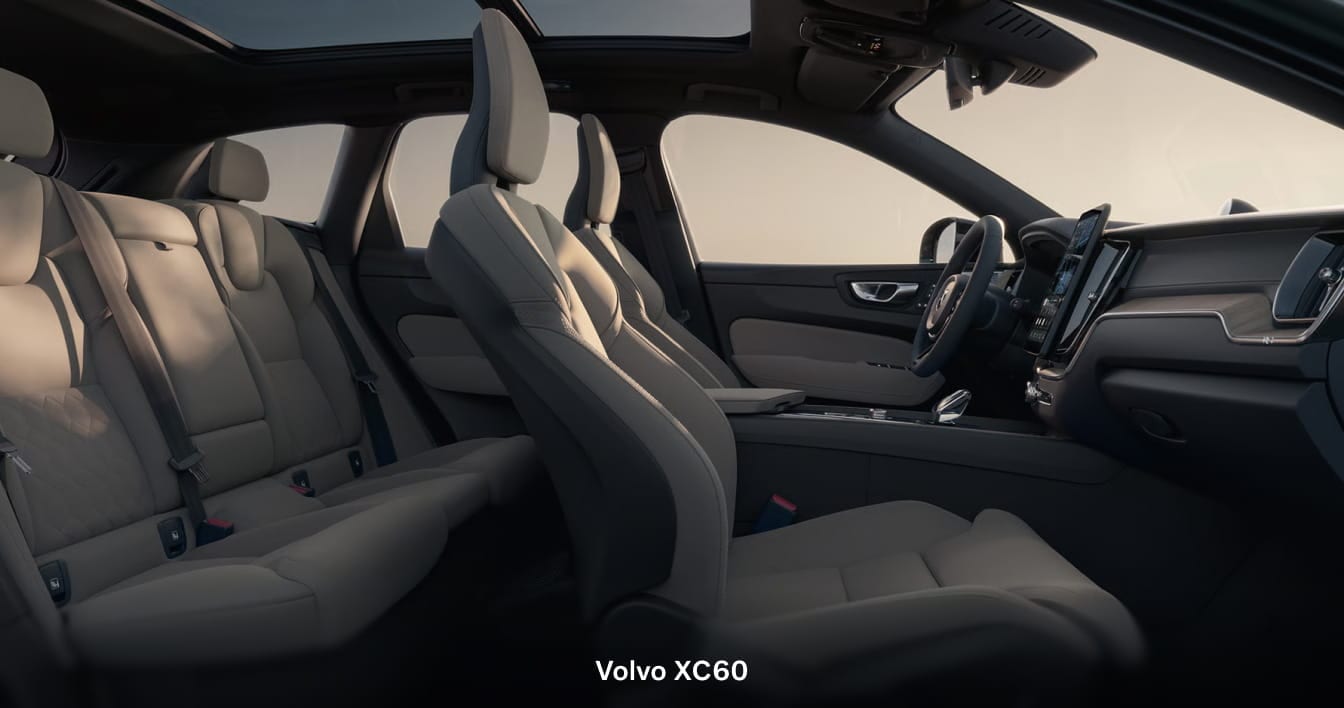
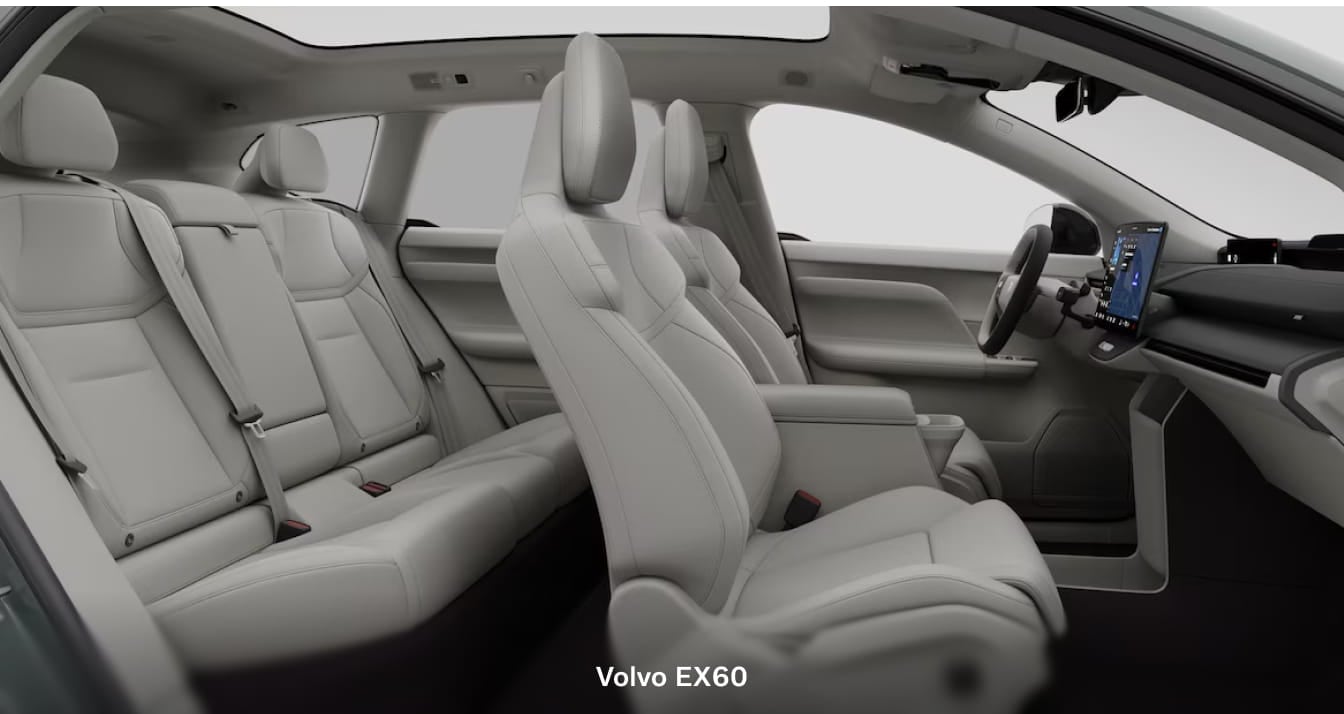
The amenities, cabin space, and array of technologies are fairly consistent between the Volvo XC60 and its PHEV counterpart, while the Volvo EX60 is the most unique of the three midsize SUVs. For instance, the fully electric Volvo SUV offers up to 64.3 cubic feet of cargo space, whereas the others contain up to 63.3 cubic feet. Another difference between Volvo EX60 and Volvo XC60 models is that the former has a front storage compartment under the hood, known as a "frunk," with 2.1 cubic feet of space.
Here are some other highlighted differences between these three vehicles:
- Every variant has Google built-in services, but the Volvo EX60 uses next-gen computing technology and AI assistance.
- The Volvo XC60 and Volvo XC60 PHEV are equipped with 11.2-inch touchscreens, whereas the Volvo EX60 has a larger 15-inch display.
- The Volvo XC60 and its PHEV sibling have a standard crystal gear selector by Orrefors®, while the Volvo EX60 does not.
Volvo EX60 vs. Volvo XC60 vs. Volvo XC60 PHEV Safety
You can expect all three options to have similar – or in many cases, the same – safety features and driver aids. These include:
- Blind Spot Information System
- Cross Traffic Alert
- Rear Collision Mitigation Support
- 360-Degree Camera
- Lane Keeping Aid
- Oncoming Lane Mitigation
Where these iterations slightly differ is that the Volvo EX60 adds Multi-Adaptive Front Safety Belts designed to lower the risk of injury if and when an accident occurs.
Which Volvo Vehicle Is Right for You?
We know this decision may be challenging, as every option in our Volvo XC60 vs. Volvo EX60 vs. Volvo XC60 PHEV review is outstanding in its own way. Our specialists at Willis Volvo Cars can help you navigate our Volvo plug-in hybrid lineup, EV options, and mild-hybrid vehicles in greater detail. Visit our dealership for a tour and test drive today!
FAQ
Is the Volvo EX60 replacing the Volvo XC60?
No, the Volvo EX60 is not replacing the Volvo XC60. The Volvo EX60 is a completely different model with an all-electric powertrain.
Should I buy the all-electric Volvo EX60 or the gas Volvo XC60?
The decision to buy an all-electric Volvo EX60 or the gas-powered Volvo XC60 depends entirely on your personal preference and goals. Both options offer elegant, Scandinavian style, but the Volvo EX60 is the most sustainable option, as it runs on electric power only, while the Volvo XC60 is a mild hybrid that uses gas and electricity.
How does the Volvo XC60 plug-in hybrid compare with the Volvo EX60?
The Volvo XC60 plug-in hybrid and Volvo EX60 both use electricity. The Volvo XC60 plug-in hybrid can travel 35 miles1 using pure electricity, but it switches to gas power after the battery is depleted. A Volvo EX60 travels only on electric power and can reach up to 400 miles.1
Contact Us Today
* Indicates a required field
1Estimated range according to the EPA driving cycles. The actual range achieved under real conditions varies depending on driving behavior, driving conditions, how you maintain your vehicle, battery and other external factors. Visit www.fueleconomy.gov for further information.
2Estimated ranges provided are subject to variation based on factors such as fuel levels, driving habits, road conditions, and individual vehicle performance. These estimates should be used for comparison purposes only and shall not be solely relied upon.
3Charging times can vary and are dependent on factors such as outdoor temperature, battery temperature, charging equipment, battery condition, and car condition.
4EPA estimated range is 23 MPG city/30 MPG highway/26 MPG combined (2.0-liter four-cylinder AWD). Your actual range will vary for many reasons, including but not limited to, driving conditions, how and where you drive, how you maintain your vehicle, battery-package/condition, and other factors. See www.fueleconomy.gov.